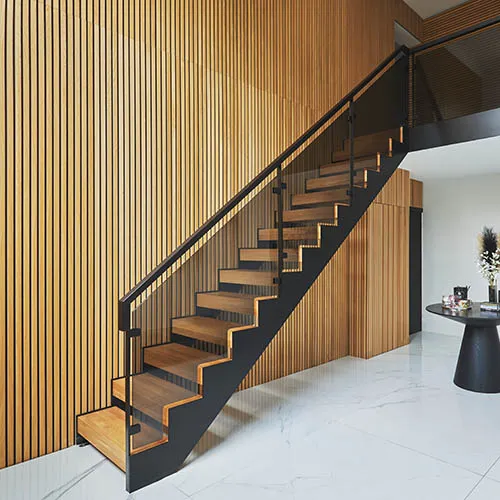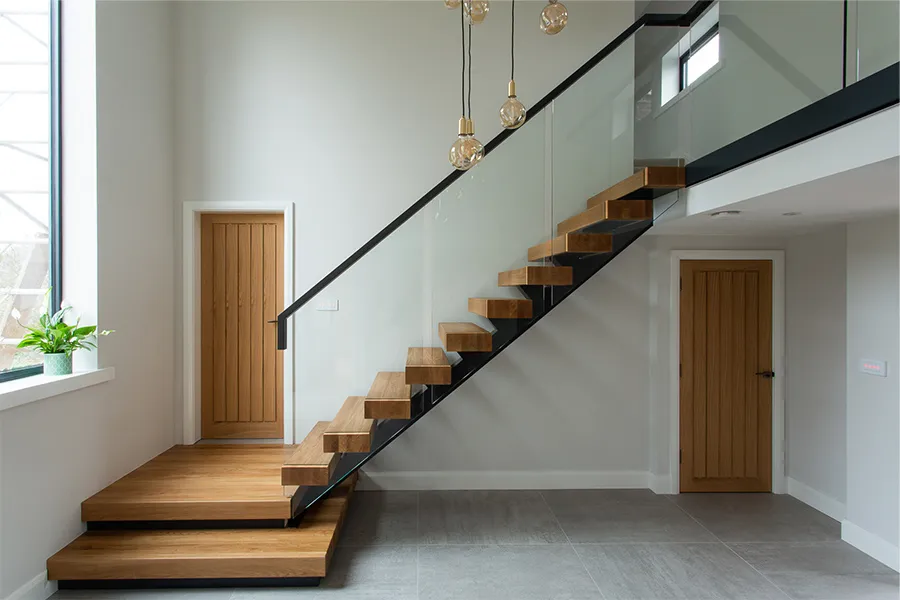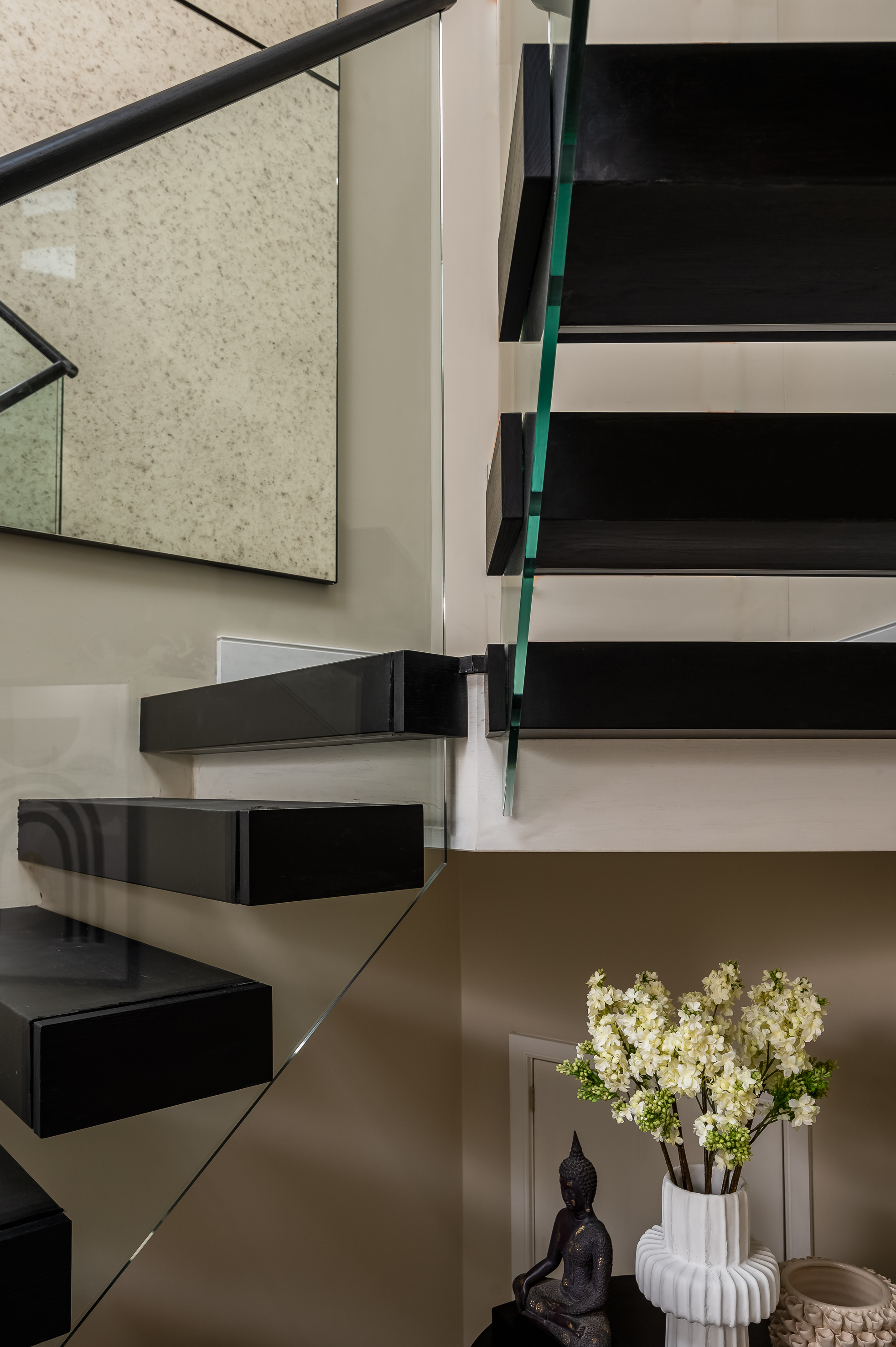
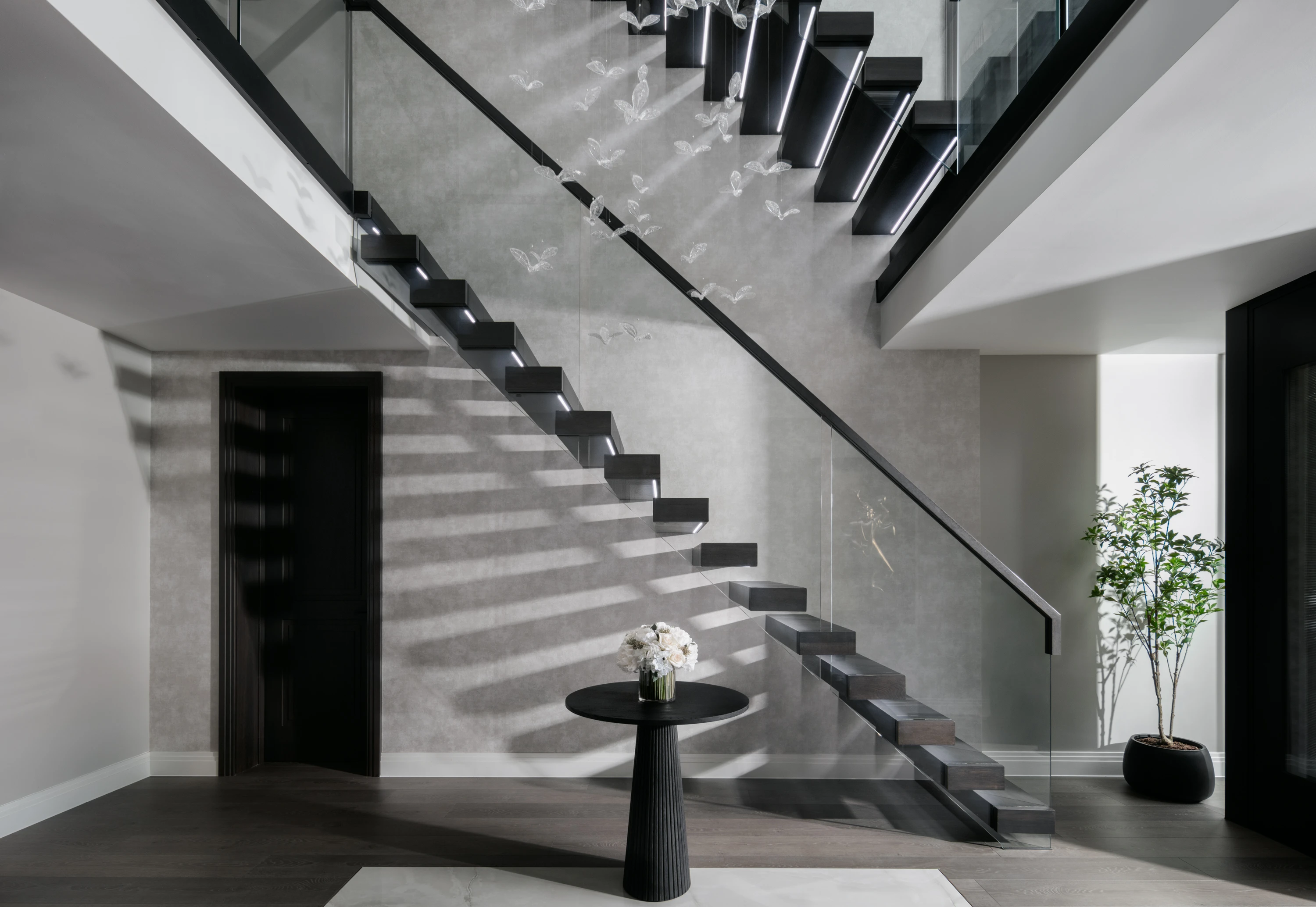
Floating staircases are a popular design choice for those who can afford them and appreciate their levitating appearance; however, due to the potential hazard they pose when poorly designed, some people might be wondering if floating staircases are legal. First Step Designs is here to set the record straight: yes, floating stairs are legal.
If you’re considering installing a floating staircase in your home or building, you might rightly be asking, are floating staircases legal? Given the absence of visible support structures—the chief appeal of floating staircases—you may be questioning how safe they are and, indeed, whether you’re allowed to install them in the first place. Good on you for making this consideration before getting started with the project!
In the United Kingdom, the Building Regulations 2010 are a collection of statutory instruments and regulations that govern the construction and alterations of all buildings. The directive establishes safety standards, including for staircases, across all construction and building elements. Given their functional qualities, floating staircases are subject to the same regulations as generic staircases and, as such, they are perfectly legal, provided the designer, builder, and installer adhere to the relevant rules and regulations.
What are floating staircases?
Floating staircases forgo many traditional staircase elements, favouring a minimalist, floating aesthetic. Features like bannisters, railings, newels, and risers are replaced by hidden brackets, wall anchors, and air. In truth, components of traditional staircases are sometimes purely aesthetic, built or added to improve the visual appeal of a staircase, and not necessarily for compliance with safety standards. As the Building Regulations 2010 indicates, floating staircases are perfectly legal and safe if the right processes are followed in manufacture and installation.
Floating staircases get foundational support from hidden steelwork and chemical anchors, which connect to a specifically designed supporting wall. Properly installed, this form of reinforcement is as safe as conventional risers and poses no more of a safety risk. Materials used are typically reinforced glass or wood and metal – depending on the desired aesthetic and how it matches the interior design.
As leaders in the UK staircase industry, First Step Designs have come up with novel solutions that make floating staircases a viable option for all homes, even ones lacking suitable anchor walls.
Using modern engineering principles and techniques, proper materials, and expert installation practices, floating staircases are safe, legal, and visually stunning.
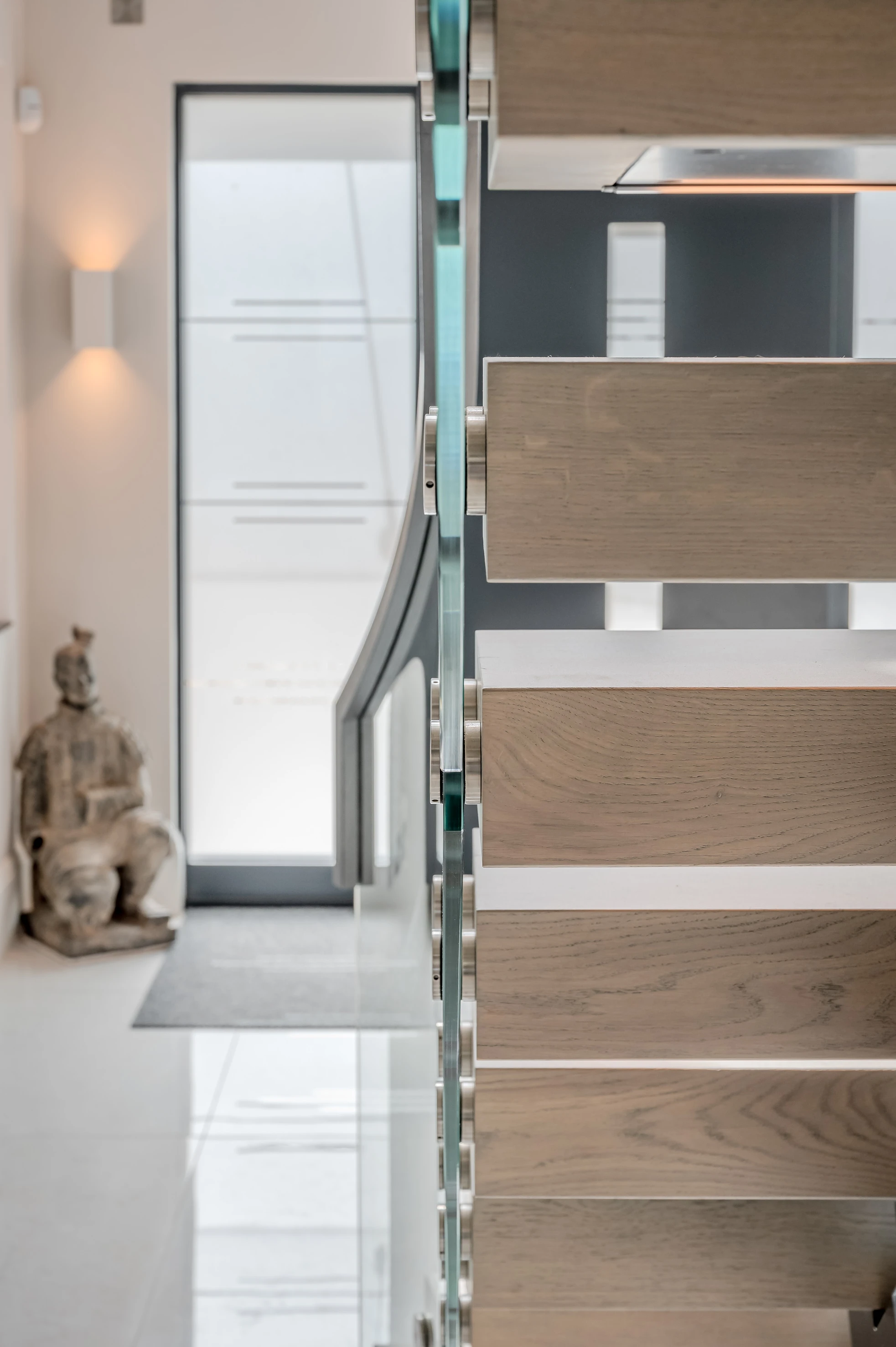


Safety Considerations for Floating Staircases
As mentioned, Building Regulations 2010 sets out the regulations and requirements for approved and legal floating staircase installations. The Building Regulations directive is separated into Approved Documents, categorised by letters.
Building Regulations Approved Document K (Protection from Falling, Collision, and Impact) sets safety standards for all British staircases, ladders, and ramps. When installing your floating staircase, First Step Designs strongly recommends working with design and installation partners who are familiar with Approved Document K provisions. Floating staircases have open risers, glass balustrades, and use structural designs that differ significantly from traditional staircases. As such, Approved Document K has explicit regulations that floating staircases must meet to be considered safe.
- Riser and Tread Requirements for Floating Staircases
The lack of risers on floating staircases creates the signature ‘floating’ effect. Paragraph 1.4 of Approved Document K dictates that the rise of each step must be consistent throughout the stairs. For example, you can not have a 210 mm riser between one set of steps and then a 190 mm riser for the next step (unless it’s after a landing turn).
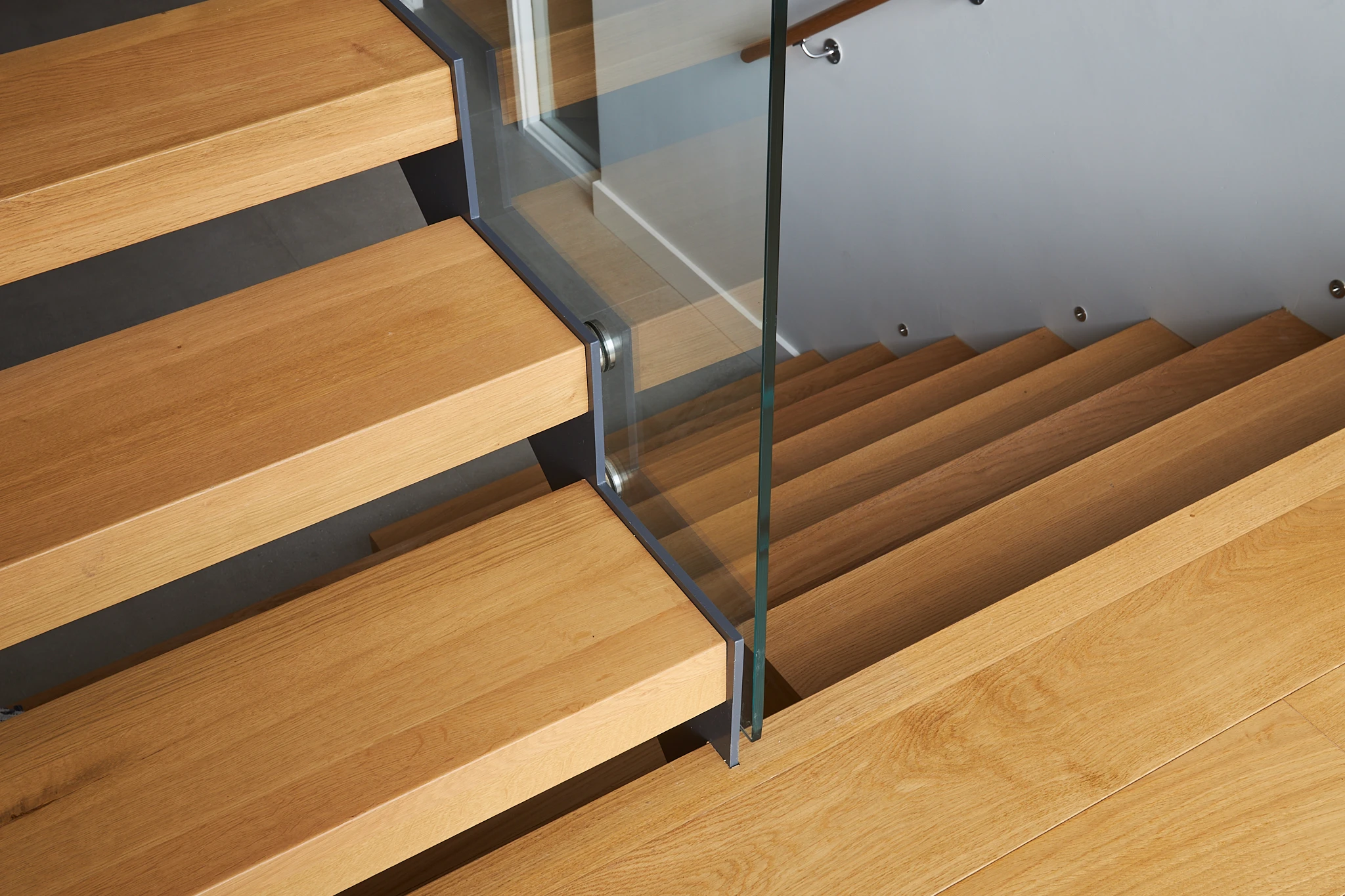
Any staircase with open risers must not feature gaps larger than a 100 mm gap. The way to test compliance is to pass a sphere of 100 mm width through the riser. If it can’t pass through, it’s compliant. This test is designed to ensure small children cannot accidentally fall through a riser gap on a floating staircase.
Moreover, each step's tread or ‘going’ must also be consistent. Every step depth must be measured the same so that its use is as predictable and safe as possible.
- Handrail regulations for Floating Staircases
In essence, a handrail must accompany any staircase when you are travlling up higher than 600mm from floor level. This allows us to create custom feature treads as an opening feature for the first 2 or 3 steps without a handrail.
If a staircase is narrower than 1 metre, you only require one handrail, but if it is wider than 1 metre, you’ll need to install handrails on both sides of the steps. You might see some images without this, but this would have been a specific request from a client and a disclaimer signed.
Guardrails, or balustrades, must be a minimum of 900 mm high on British staircases to prevent falling. When installing your floating staircase, it must be accompanied by at least one guardrail and handrail, depending on the width of the steps.
Safety is paramount when installing floating staircases, and while you may be concerned a handrail or guardrail will take away from the floating aesthetic, plenty of solutions promise both enhanced safety and a beautiful aesthetic.
- Slip Resistance for Floating Staircases
Approved Document K outlines several ways to improve slip resistance on floating staircases. High-traction materials such as naturally grained timber, brushed metal, or etched glass can enhance grip without additional components.
Anti-slip coatings, varnishes, or sealants are also effective. At First Step Designs, we typically apply a re-coatable anti-slip lacquer as part of standard maintenance. Steel inset strips can be added for extra safety, although most clients prefer anti-slip finishes to preserve the staircase’s aesthetic.
- Structural Safety of Floating Staircases
The structural safety of floating staircases is regulated by a separate document, Approved Document A. Document A regulates all structural safety components in British housing and construction. Floating staircases are subject to the exact structural safety requirements of any other staircase.
Over the last 10 years, our cantilever stairs (another name for floating staircases) have been stress-tested and signed off for use by an external team of structural engineers. Each staircase must be able to support the weight of an average adult on every step to pass structural testing. First Step Design floating staircases simply don’t deflect, bow, or move under load.
First Step Designs: UK Leaders in Safe, Beautiful, and Compliant Floating Stairs
First Step Designs has been designing, manufacturing, and installing floating staircases for UK homeowners for more than a decade. We practically sleep with a copy of Building Regulations 2010 next to our beds and we are intimately familiar with UK building regulations and codes.
If you have a design in mind and are looking for a partner to bring it to life safely and in compliance with regulations, give us a call. We’d love to hear from you. We’re also happy to talk you through the process of designing and building a floating staircase and provide obligation-free 24-hour quotations.
The best possible way to avoid any unnecessary disappointment, compliance issues, or danger is to work with an experienced floating staircase manufacturer. Building regulations are complex and confusing; trust the UK’s leading staircase designers and winners of the 2024 Build It Award for Best Staircase for sound advice and stairs that turn heads, not ankles.
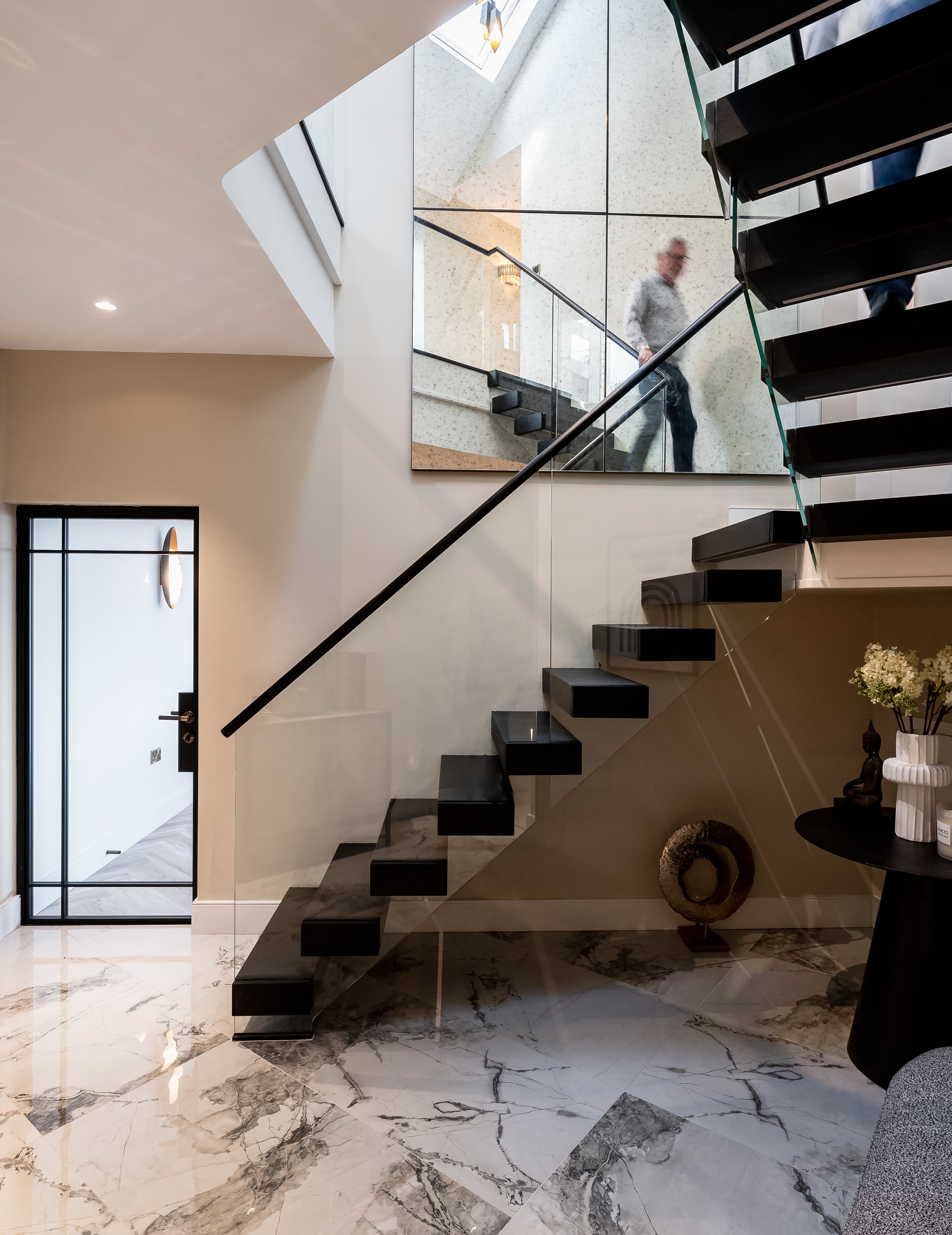
Getting a floating staircase quote
First Step Designs offers a simple, hassle-free, same-day quotation service for all floating staircase options. Whether you need guidance through the design process or already know exactly what you want, our team is ready to help bring your vision to life.
Before getting in touch, consider a few key points to make the most of our conversation. Think about your design preferences — even collecting a few reference images (glass, timber, metal designs, safety features, etc.) can help. Note where the staircase will go, along with basic measurements such as wall lengths and ceiling heights. Having an approximate budget in mind is also useful, helping us recommend the best approach from the start.
We look forward to hearing from you, no matter where you are in the UK. Reach out with these details and we’ll provide a personalised, same-day quote — or simply get in touch for an exploratory chat.
Floating Stairs Cheshire
Floating Stairs Derbyshire
Floating Stairs Manchester
Floating Stairs Cambridgeshire
Floating Stairs Oxfordshire
Floating Stairs Gloucester
Floating Stairs Liverpool
Floating Stairs Yorkshire
Let's talk
Get in touch and let us show you how we can transform your home.





.jpg)