DRAG
Fair enough: material choice is mostly what you see. But it's also what you hear at 6am, what you clean, how the hallway holds light, and how the staircase ages over decades of daily use. The good news is that this isn't really a choice between materials — nearly every bespoke staircase combines two or three. This guide covers the main options, how they behave in real homes, and how to land on the right mix.
(Part 3 of our Ultimate Guide to Bespoke Staircases in the UK.)

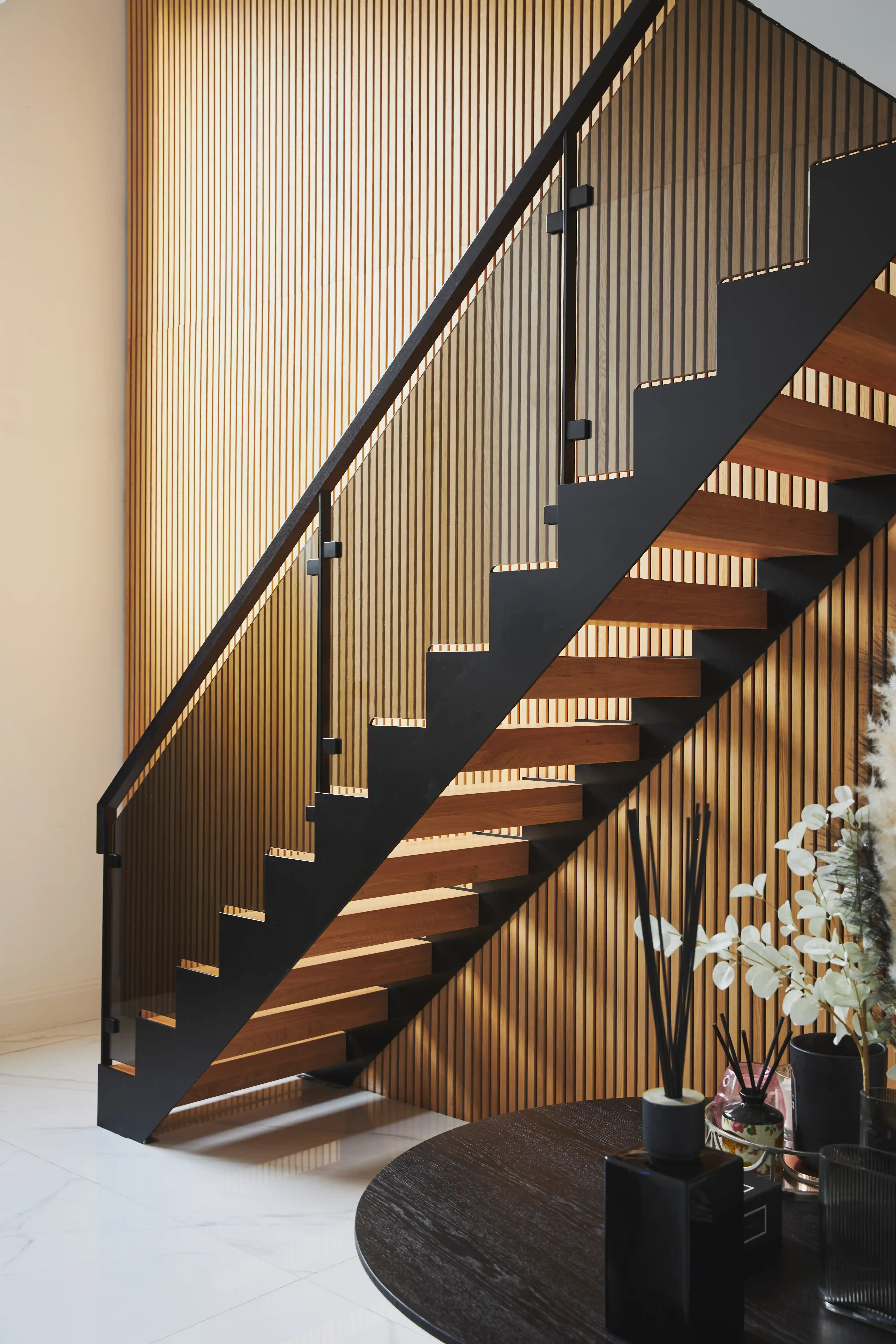
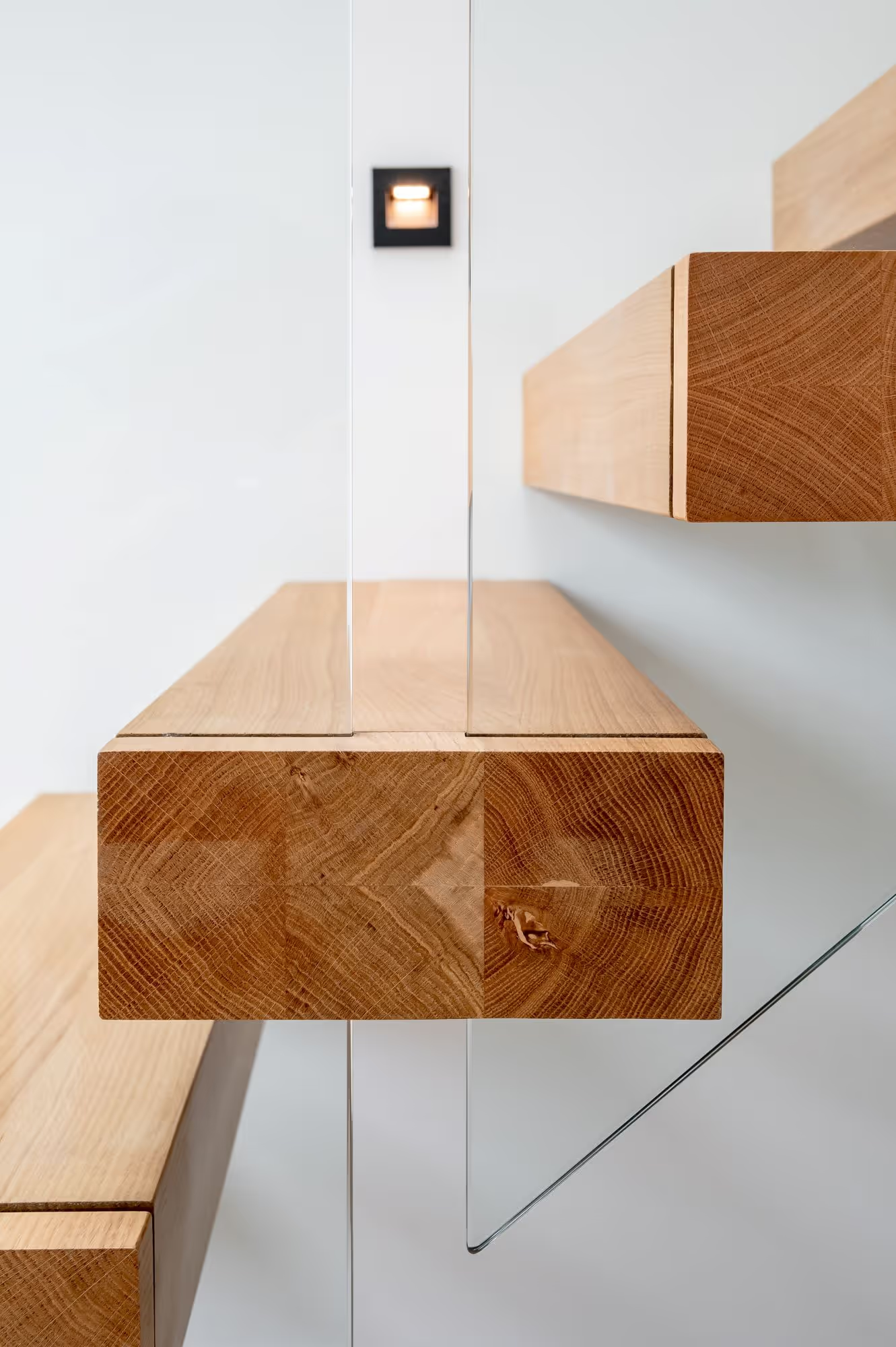
Oak dominates British staircases because it earns its place: warm in colour, hard-wearing enough for the busiest route in the house, and structurally dependable. It takes finishes beautifully, from pale, contemporary natural oils to darker stains, and its grain gives even minimal designs a sense of craft. Oak also plays well with everything else: it softens steel, warms glass, and sits comfortably in both period and modern homes.
If there's a downside, it's ubiquity, which is where cut details, unusual profiles and thoughtful finishing separate a bespoke oak staircase from a catalogue one. If you’re weighing up the two, our guide to bespoke vs off-the-shelf staircases explains the real difference

Oak isn't the only timber worth considering. Walnut brings depth and darkness. It's a genuinely luxurious tread material that makes pale interiors sing. Ash is lighter, subtly grained and slightly more affordable, well suited to Scandinavian-leaning schemes.
And painted finishes deserve more respect than they get: painted softwood strings and spindles with hardwood treads and handrails is the classic English formula, right at home in period properties, and a smart way to put budget where hands and feet actually touch. Two-tone combinations, painted risers with oak treads, remain one of the most requested looks.
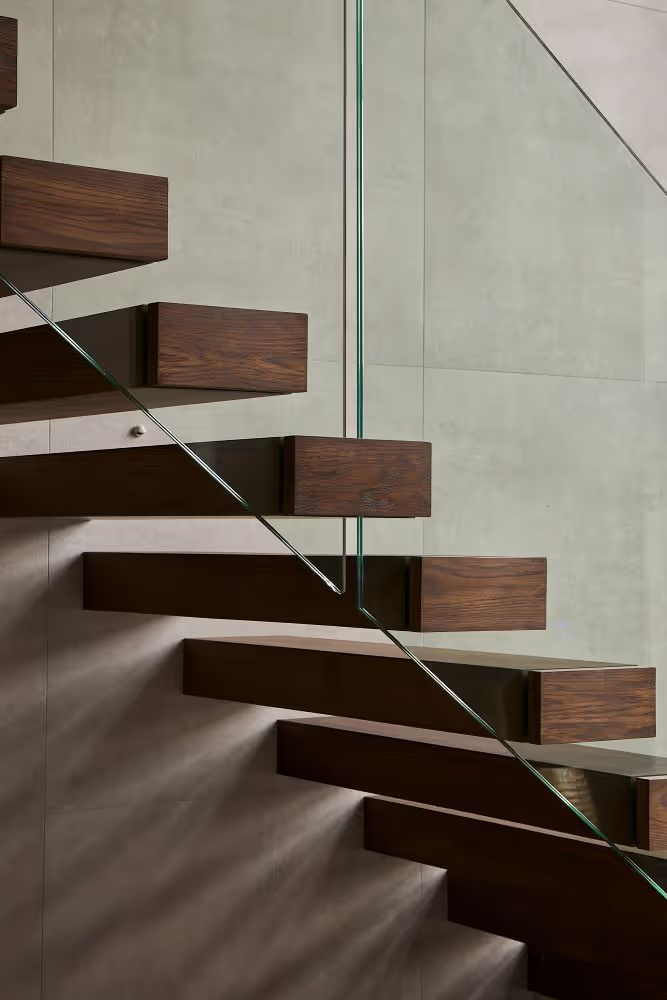

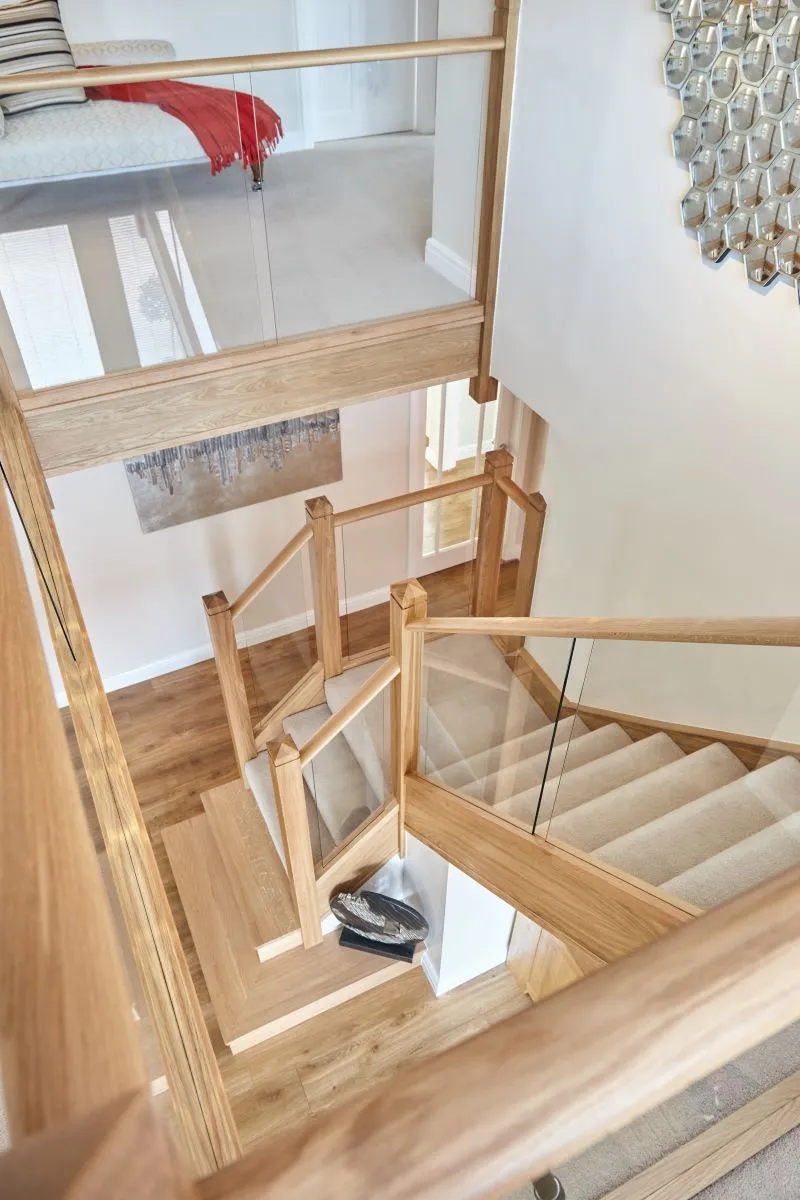
Glass balustrades solve the oldest hallway problem: staircases that block light. Swapping timber spindles or boxed-in panels for glass can transform a dark hall without touching the structurewhich makes it one of the most popular staircase renovation upgrades we carry out.” Modern staircase glass is toughened (and laminated where the glass works structurally, as in frameless designs), so it's engineered for safety, not just looks.
Options range from glass panels held in clamps or slotted into timber, through to fully frameless runs with minimal fixings. And because compliant glass panels leave no climbable footholds and no gaps, they're often a genuinely safer choice for households with young children.
Not sure whether your existing staircase can be updated like this? Read staircase renovation vs replacement.
Steel does two different jobs in staircases. Structurally, it's the enabler: central spines, hidden stringers and cantilevered supports that make floating staircases and sculptural designs possible at all. Visually, it's the fine-line material: slim powder-coated spindles, elegant handrail brackets and crisp black detailing that gives timber schemes definition.
Powder-coated finishes are extremely durable and available in effectively any colour, though matt black remains the runaway favourite. Brass and bronze-toned metalwork is growing as an accent for those wanting warmth with their contrast.
You can see both roles at work across our metal staircases.
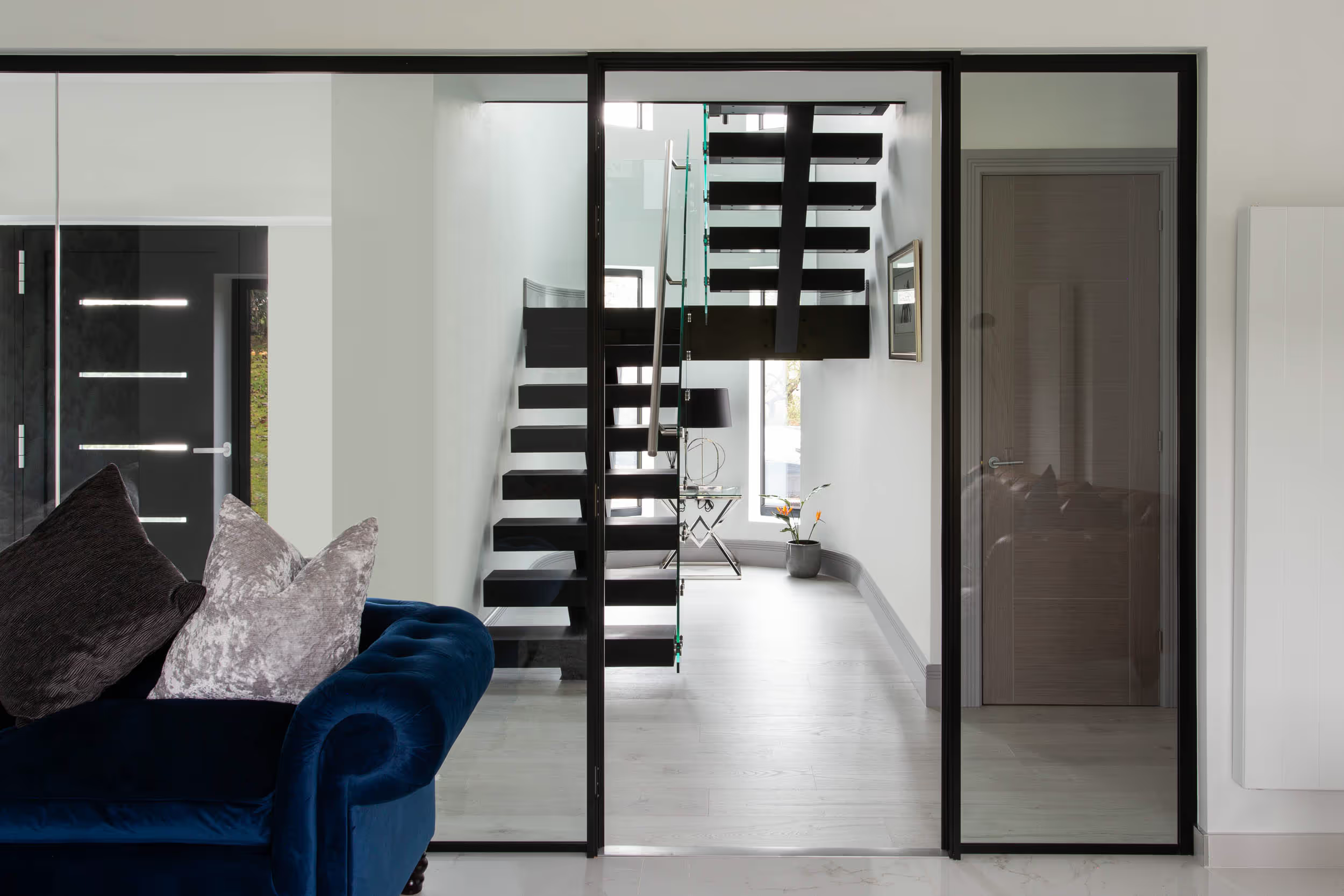
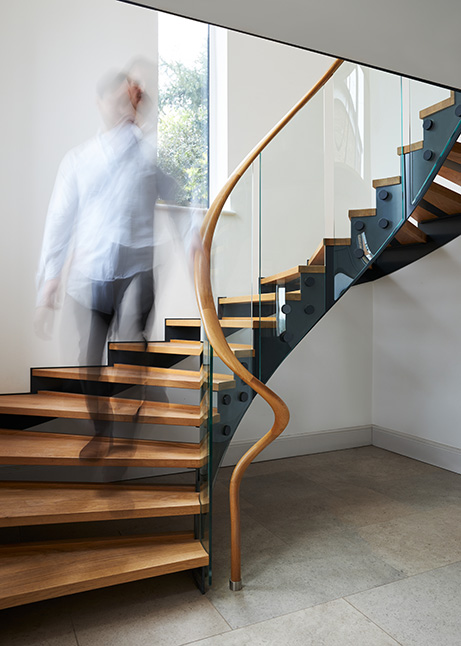
Material decisions follow you long after installation day. Timber treads are warmer and quieter than you'd expect, and quieter still when properly fixed, which is a construction question as much as a material one.
Glass shows fingerprints and needs the same wiping-down as a shower screen; households with small children should expect to do it often, and should decide if that trade is worth the light (most say yes). We weigh this up in more detail in the pros and cons of glass balustrades.
Oiled oak wants an occasional re-oil on high-traffic treads; painted finishes will eventually want repainting.
None of this should scare you off, but it should inform where each material goes.
Almost no bespoke staircase is one material. The craft is in the mix: oak treads on a steel spine; painted strings with a walnut handrail; glass panels framed in timber or floating free. Curved designs push this further, with timber, steel and glass all shaped to follow the line of a curved staircase. A useful way to think about it is one material for warmth (usually timber), one for light (glass, or simply open space), and one for definition (metal, or a painted contrast).
Get the proportions of those three roles right for your particular house and the staircase will feel inevitable, as if the building specified it itself.
To see how different combinations look in finished homes, browse our staircase styles.

Gareth
Designer
Gareth embarked on his journey in staircase design 16 years ago as an apprentice in a woodwork shop. Over the years, he diligently refined his skills, evolving into a creative CAD expert with a supreme skillset.
Beyond his professional life, Gareth is a proud father of three. His passion extends beyond the design realm as he immerses himself in the world of golf, playing courses all over the UK. His favourite thing to do is buy golf clubs without his partners permission.

Richard
Designer
Rich has been immersed in the woodworking industry since his school days. With a keen interest in DIY projects, he found his way into the staircase industry 20 years ago. Starting as a machinist and doubling as a surveyor, Rich's knowledge of staircases and materials has grown into a wealth of experience.
When not at the office, Rich enjoys quality time with his delightful daughter, who keeps him happily occupied. During his free moments, he nurtures a profound passion for music, immersing himself in music production and DJing to constantly elevate his creative pursuits. His favourite thing to do cook family dinners like his italian ancestors.

Adam
Lead Designer
Adam has been obsessed with design since school. He has bachelors degree in Design Technology and a Master degree in Industrial Design. He uses these skills masterfully creating some of the most unique staircases in the country.
Outside of design life, Adam is a keen triathlete. You will find him either cycling, running or swimming somewhere in the country. His favourite thing to do is eat carbs.


